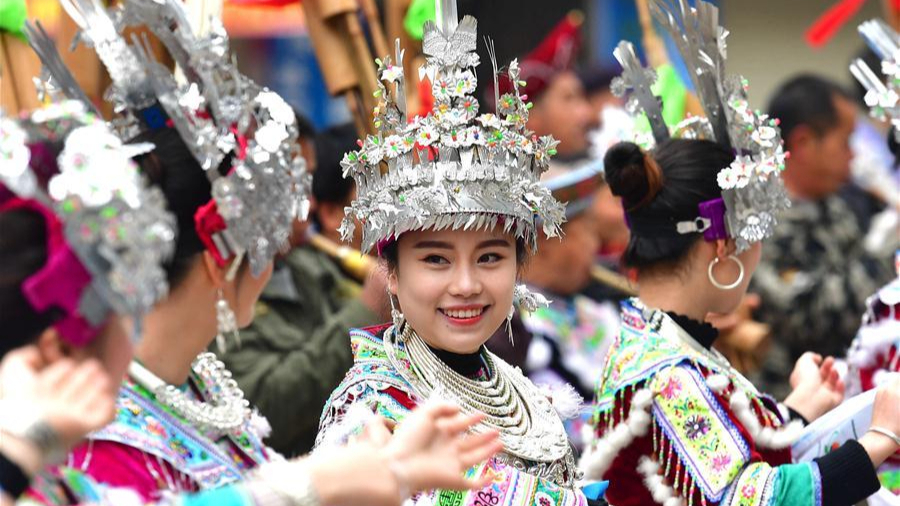
Costume of Miao Ethnic Group
Introduction
The costume of the Miao ethnic group is a vivid representation of their rich cultural heritage and artistic expression. Predominantly residing in Southwest China's Guizhou province, the Miao people are known for their vibrant festivals and traditional attire that both reflect and preserve their cultural identity. These costumes are often adorned with intricate embroidery and silver accessories, serving not only as clothing but as a canvas for storytelling and cultural expression. The attire is typically worn during significant festivals such as the Flower Hill Festival and the Fangu Festival, where the Miao community gathers in celebration, showcasing their elaborate and colorful dress. The Miao costume is a symbol of their social status, age, and personal taste, with variations in design and detail reflecting the diversity within the group.
Types of Costume
Men's Costume
Miao men's costumes are characterized by simplicity and functionality, yet they maintain an element of elegance through their design. Typically, the attire includes a short jacket and trousers, often dyed in deep indigo. The jackets may feature embroidery on the edges or across the back, providing both aesthetic appeal and cultural significance. The use of silver accessories is less common in men's costumes compared to women's, yet they may wear silver necklaces or hats during festivals as a sign of prosperity and good fortune.
Women's Costume
In contrast, Miao women's costumes are often more elaborate and colorful. The ensemble usually consists of a pleated skirt paired with a richly embroidered jacket. The embroidery is a significant aspect of the women's costume, featuring intricate patterns that can include floral, animal, or geometric designs. These patterns hold symbolic meanings and are passed down from generation to generation. Silver ornaments are a prominent feature of women's costumes, including large headdresses, necklaces, and bracelets, which add to the visual spectacle during Miao festivals.
Children's Costume
Children's costumes in the Miao community are miniature versions of adult attire but are often simpler in design. Nonetheless, they are equally vibrant and colorful, designed to instill a sense of cultural pride from a young age. These costumes are often tailored for comfort and ease, allowing children to participate in the vigorous dances and activities during festivals. The attire for children also includes symbolic elements, such as small silver accessories, which are believed to protect them from evil spirits.
Materials and Techniques
Fabrics Used
The primary fabric used in Miao costumes is traditionally handwoven cotton or hemp, dyed using natural indigo to create rich, deep hues. In recent times, silk and velvet have also been incorporated, especially for festive attire, adding an element of luxury to the garments. The choice of fabric is crucial as it must be durable enough to withstand the elaborate embroidery and the addition of heavy silver ornaments.
Embroidery Techniques
Embroidery is a cornerstone of Miao costume-making, with techniques that have been refined over generations. The Miao are renowned for their unique embroidery styles, which often include cross-stitching, patchwork, and batik. These techniques are used to create detailed motifs that tell stories of Miao folklore, history, and everyday life. The embroidery process is labor-intensive, requiring great skill and precision, often taking several months to complete a single costume.
Cultural Significance
The costume of the Miao ethnic group holds deep cultural significance. It is not merely a form of attire but a symbol of identity and tradition. Each piece of clothing is imbued with cultural narratives, reflecting the Miao's respect for their ancestors and their connection to nature. The elaborate designs and use of silver are believed to ward off evil spirits and bring prosperity. During festivals, the costumes become a focal point, allowing individuals to express their creativity and communal harmony.








